
New Strategies for Rehabilitation and Pharmacological Treatment of Fatigue Syndrome in Multiple Sclerosis.

par SFCCE | 2020 | Publication Santé
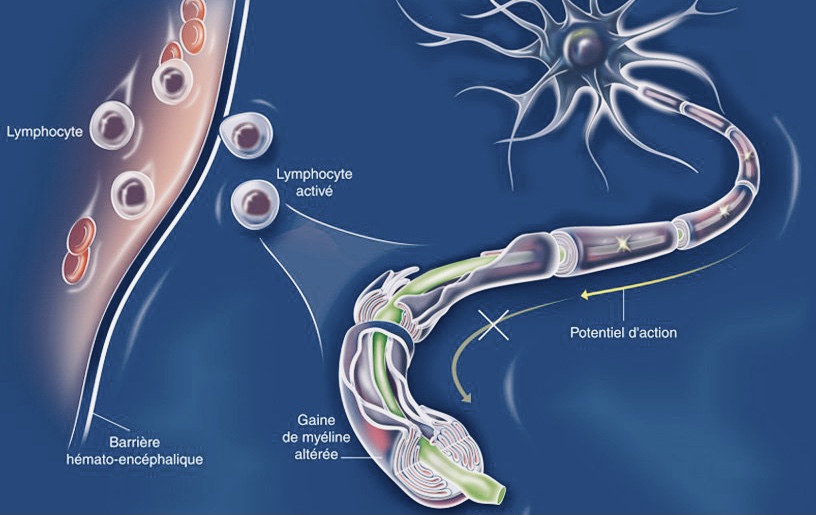
Multiple sclerosis (MS) is the most common autoimmune disease of the central nervous system (CNS), with an inflammatory demyelinating basis and a progressive course. The course of the disease is very diverse and unpredictable. Patients face many problems on a daily basis, such as problems with vision; sensory, balance, and gait disturbances; pain; muscle weakness; spasticity; tremor; urinary and fecal disorders; depression; and rapidly growing fatigue, which significantly influences quality of life among MS patients. Excessive fatigue occurs in most MS patients in all stages of this disease and is named MS-related fatigue. The crucial issue is the lack of effective treatment; therefore, this review focuses not only on the most common treatment methods, but also on additional novel therapies such as whole-body cryotherapy (WBC), functional electrical stimulation (FES), and non-invasive brain stimulation (NIBS). We also highlight the advantages and disadvantages of the most popular clinical scales used to measure fatigue. The entire understanding of the origins of MS-related fatigue may lead to the development of more effective strategies that can improve quality of life among MS patients. A literature search was performed using MEDLINE, EMBASE, and PEDro databases.

Zielińska-Nowak, E, Włodarczyk, L, Kostka, J, Miller, E. (2020)

Full Article :  https://pubmed.ncbi.nlm.nih.gov/33171768/ 

Adaptive changes in muscle activity after cryotherapy treatment: Potential mechanism for improvement the functional state in patients with multiple sclerosis

par SFCCE | 2021 | Publication Santé

Background: The available literature lacks data about the influence of whole body cryotherapy (WBC) on muscle activity in patients with sclerosis multiplex (MS).

Objective: Assessment of the influence of the 20 WBC series on the surface electromyography (sEMG) signal and the relationship between it and the functional state in patients with MS.

Methods: The study group was 114 of MS patients (aged 45.24±11.88yr.,) which 74 of them received 20 of WBC. An assessment was made of: the hand grip (HGS), Timed 25-Foot Walk, Fatigue Severity Scale, sEMG signal from the dominant limb.

Results: After a series of 20 WBC: in the rest electromyograms, an increase of extensor carpi radialis (ECR) and a decrease of flexor carpi radialis (FCR) amplitude were demonstrated (non-normalized signal ECR p = 0.0001); significant differences in sEMG rest signals between ECR and FCR have decreased; for voluntary contraction in both assessed antagonistic muscle amplitude was significantly decreased (p = 0.0005; p = 0.0316, p = 0.0185); an increase of HGS (p < 0.001); gait improvement (p = 0.001); decrease fatigue (p = 0.024). No significant changes were observed in the control group.

Conclusions: Series of 20 WBC improves the functional state and reduces fatigue in patients with MS, which may be due to adaptive changes in bioelectrical muscle activity.

Radecka, A, Knyszyńska, A, Łuczak, J, Lubkowska, A. (2021)

Full Article :  https://pubmed.ncbi.nlm.nih.gov/33386821/