Cryotherapy Models and Timing-Sequence Recovery of Exercise-Induced Muscle Damage in Middle- and Long-Distance Runners.

par SFCCE | 2020 | Publication Sport

Context: Among sports-recovery methods, cold-water immersion (CWI), contrast-water therapy (CWT), and whole-body cryotherapy (WBC) have been applied widely to enhance recovery after strenuous exercise. However, the different timing effects in exercise-induced muscle damage (EIMD) after these recovery protocols remain unknown.

Objective: To compare the effects of CWI, CWT, and WBC on the timing-sequence recovery of EIMD through different indicator responses.

Design: Crossover study.
Setting: Laboratory.
Patients or other participants: Twelve male middle- and long-distance runners from the Beijing Sport University (age = 21.00 ± 0.95 years).

Intervention(s): Participants were treated with different recovery methods (control [CON], CWI, CWT, WBC) immediately postexercise and at 24, 48, and 72 hours postexercise.

Main outcome measure(s): We measured perceived sensation using a visual analog scale (VAS), plasma creatine kinase (CK) activity, plasma C-reactive protein (CRP) activity, and vertical-jump height (VJH) pre-exercise, immediately postexercise, and at 1, 24, 48, 72, and 96 hours postexercise.

Results: For the VAS score and CK activity, WBC exhibited better timing-sequence recovery effects than CON and CWI (P < .05), but the CWT demonstrated better effects than CON (P < .05). The CRP activity was lower after WBC than after the other interventions (P < .05). The VJH was lower after WBC than after CON and CWI (P < .05).

Conclusions: The WBC positively affected VAS, CK, CRP, and VJH associated with EIMD. The CWT and CWI also showed positive effects. However, for the activity and timing-sequence effect, CWT had weaker effects than WBC.

Qu, C, Wu, Z, Xu, M, Qin, F, Dong, Y, Wang, Z, Zhao, J. (2020)

Full Article : https://pubmed.ncbi.nlm.nih.gov/32160058/
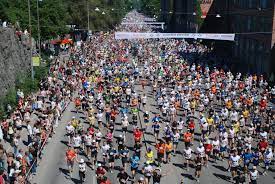
Recovery following a marathon: a comparison of cold water immersion, whole body cryotherapy and a placebo control.

par SFCCE | 2018 | Publication Sport

Purpose: Cryotherapy is an increasingly popular recovery strategy used in an attempt to attenuate the negative impact of strenuous physical activity on subsequent exercise. Therefore, this study aimed to assess the effects of whole body cryotherapy (WBC) and cold water immersion (CWI) on markers of recovery following a marathon.

Methods: Thirty-one endurance trained males completed a marathon. Participants were randomly assigned to a CWI, WBC or placebo group. Perceptions of muscle soreness, training stress and markers of muscle function were recorded before the marathon and at 24 and 48 h post exercise. Blood samples were taken at baseline, post intervention and 24 and 48 h post intervention to assess inflammation and muscle damage.

Results: WBC had a harmful effect on muscle function compared to CWI post marathon. WBC positively influenced perceptions of training stress compared to CWI. With the exception of C-reactive protein (CRP) at 24 and 48 h, neither cryotherapy intervention positively influenced blood borne markers of inflammation or structural damage compared to placebo.

Conclusion: The findings show WBC has a negative impact on muscle function, perceptions of soreness and a number of blood parameters compared to CWI, contradicting the suggestion that WBC may be a superior recovery strategy. Further, cryotherapy is no more effective than a placebo intervention at improving functional recovery or perceptions of training stress following a marathon. These findings lend further evidence to suggest that treatment belief and the placebo effect may be largely responsible for the beneficial effects of cryotherapy on recovery following a marathon.

Wilson LJCockburn EPaice, K, Sinclair, S, Faki, T, HillsFAGondek, MB, Wood,A, Dimitriou, L. (2018)

Full Article :  https://pubmed.ncbi.nlm.nih.gov/29127510/ 

The Impact of Recovery Practices Adopted by Professional Tennis Players on Fatigue Markers According to Training Type Clusters.

par SFCCE | 2020 | Publication Sport

Introduction: Modern tennis players face congested schedules that force the adoption of various recovery strategies. Thus, recovery must be fine-tuned with an accurate quantification of its impacts, especially with regards to training-induced fatigue. The present study aimed to examine the training type clusters and recovery practices adopted by elite tennis players under ecological training conditions. The respective impacts of training type clusters and recovery techniques on subjective variables, which reflect the players’ recovery perceptions, were subsequently determined. Methods: During 15 consecutive months, a total of 35 elite tennis players filled out questionnaires to report their daily training load, training session content, adopted recovery modalities after training, and perceived recovery. Results: The hierarchical analysis identified three clusters: “combined tennis and S&C training,” “predominant tennis training” and “predominant S&C training.” Muscle soreness and perceived fatigue were not significantly different among these three clusters (p = 0.07-0.65). Across the 146 recorded training and recovery sessions, players primarily employed a combination of 2 or 3 modalities, with cooling strategies being the most widely used technique (87.6%). Mixed linear models revealed that independent of training clusters, cooling strategies significantly reduced muscle soreness (Δmuscle soreness: β = -1.00, p = 0.02). Among the cooling techniques used, whole-body cryotherapy induced a greater perceived recovery than cold-water immersion (p = 0.02). Conclusion: These results showed that perceived recovery was not sensitive to training clusters or the associated acute training load. However, cooling strategies were relevant for the alleviation of tennis training-induced soreness. This study represents an initial step toward a periodized approach of recovery interventions, based on the interactions between training load, training contents, and perceived recovery.

Poignard, M, Guilhem, G, de Larochelambert, Q, Montalvan, B, Bieuzen, F. (2020)

Full Article :  https://pubmed.ncbi.nlm.nih.gov/33345098/