Effects of Whole-Body Cryostimulation (-90°C) on Somnolence and Psychological Well-Being in an Older Patient with Restless Legs Syndrome.

par SFCCE | 2020 | Publication Santé

Background: We aimed at evaluating the feasibility and effects of intense (i.e. -90°C) whole-body cryostimulation (WBC) on somnolence and psychological well-being in an older-adult patient diagnosed with restless legs syndrome (RLS).

Methods: An interrupted time series approach was used in which the efficacy of cryostimulation was evaluated by measuring self-reported fatigue, wake time sleepiness, and well-being several times prior to, during, and after exposure to treatment (i.e. daily 3-min sessions of intense WBC).

Results: No adverse event occurred. Reported levels of sleepiness decreased immediately following the beginning of the treatment phase. In the same time, self-reported well-being significantly increased. Effects sizes were of large magnitude.

Conclusion: In summary, the present study demonstrated that daily exposure to extremely cold air in an enclosed space for 2 weeks was feasible and effective in promoting physical and psychological states in an older patient with sleep disturbances.

Kasmi, S, Filliard, JR, Polidori, G, Bouchet, B, Blancheteau, Y, Legrand, FD. (2020)

Full Article :  https://pubmed.ncbi.nlm.nih.gov/31515948/ 

Impact of acute partial‑body cryostimulation on cognitive performance, cerebral oxygenation, and cardiac autonomic activity

par SFCCE | 2021 | Publication Santé

We assessed the effects of a 3‑min partial‑body cryostimulation (PBC) exposure—where the whole body is exposed to extreme cold, except the head—on cognitive inhibition performance and the possible implications of parasympathetic cardiac control and cerebral oxygenation. In a randomized controlled counterbalanced cross‑over design, eighteen healthy young adults (nine males and nine females) completed a cognitive Stroop task before and after one single session of PBC (3‑min exposure at − 150 °C cold air) and a control condition (3 min at room temperature, 20 °C). During the cognitive task, heart rate variability (HRV) and cerebral oxygenation of the prefrontal cortex were measured using heart rate monitoring and near‑infrared spectroscopy methods. We also recorded the cerebral oxygenation during the PBC session. Stroop performance after PBC exposure was enhanced (562.0 ± 40.2 ms) compared to pre‑PBC (602.0 ± 56.4 ms; P < 0.042) in males only, accompanied by an increase (P < 0.05) in HRV indices of parasympathetic tone, in greater proportion in males compared to females. During PBC, cerebral oxygenation decreased in a similar proportion in males and females but the cerebral extraction (deoxyhemoglobin: ΔHHb) remained higher after exposure in males, only. These data demonstrate that a single PBC session enhances the cognitive inhibition performance on a Stroop task in males, partly mediated by a greater parasympathetic cardiac control and greater cerebral oxygenation. The effects of PBC on cognitive function seem different in females, possibly explained by a different sensitivity to cold stimulation.

Dimitri Theurot1, Benoit Dugué1, Wafa Douzi1, Paul Guitet1, Julien Louis2 & Olivier Dupuy 1,3* 

Full article : | https://doi.org/10.1038/s41598-021-87089-y

L’Ictus amnésique : qu’est-ce ?

par SFCCE | 2021 | Publication Santé

Il s’agit d’une perte de la mémoire à court terme uniquement associée à une désorientation dans le temps et l’espace, survenant le plus souvent chez des personnes ayant plus de 50 ans, et de courte durée (toujours moins de 24 heures, le plus souvent 4 à 8 heures) avant un retour à la normale. Pendant l’épisode, les personnes présentent un état décrit comme une perplexité anxieuse : ils répètent toujours les mêmes questions « quels jours sommes-nous, qu’est-ce que je fais ici » avec une anxiété apparente. Par contre, la personne sait qui elle est, où elle habite, etc. Il n’y a pas d’autres signe neurologique. (1)

Est-ce grave ?

Le retour à la normale des capacités de mémoire à court terme se fait toujours après 24h. Par contre, la personne ne garde pas le souvenir de l’ictus. Il est habituel de considérer que l’ictus n’est pas associé à un risque plus important de démence, ni d’accident vasculaire cérébral, ni d’épilepsie. Il est par contre plus fréquent chez les migraineux (2)

Comment en faire le diagnostic

Il est uniquement clinique (3) en observant la personne pendant l’ictus, ou en interrogeant un témoin après coup. Lors de l’épisode, l’examen neurologique est normal. Les examens complémentaires sont normaux : prise de sang électroencéphalogramme, séquences classique d’IRM (1)

Pourquoi fait-on un ictus ?

Les circonstances déclenchantes les plus classiques sont par ordre de fréquence (4,5) : un effort physique, le stress, une immersion en eau froide, un rapport sexuel, un effort de vomissement ou de toux, une douleur intense.

 Les personnes faisant un ictus auraient plus fréquemment une HTA. A l’inverse le diabète protègerait. Les autres facteurs de risques vasculaires ne jouent pas (dyslipidémie) (6). Il existe actuellement 2 théories pour expliquer l’ictus, soit un équivalent migraineux, soit un mauvais retour veineux (1).

Risque-t-on une récidive ?

Les études les plus récentes, ont inclus jusqu’à 1044 patients (6). 15% d’entre eux ont présenté une ou plusieurs récidives (jusqu’à 9 fois, le plus souvent 3 fois). La récidive est plus fréquente lorsque le premier ictus survient jeune et qu’il existe une histoire familiale ou personnelle de migraine.

La cryothérapie peut-elle provoquer des ictus ?

Dans les descriptions historiques, il a été montré que l’ictus pouvait survenir après une immersion en eau froide. Récemment un article de l’UFC que choisir décrit un cas après une séance de cryothérapie. Il reste difficile cependant de pouvoir affirmer la causalité. La proximité entre 2 évènements n’est pas la demonstration que l’un provoque l’autre.

La conclusion de la SFCCE

Il est actuellement impossible d’affirmer ou d’infirmer que la CCE peut provoquer un ictus. Quant bien même il y aurait un jour un lien établi, il est communément admis que l’ictus est un épisode banal, extrêmement rare qui ne laisse aucune séquelle.

Chez une personne ayant eu un ictus il est préférable de déconseiller la CCE car un ictus recidive chez une personne sur 6

La SFCCE est une société savante dédiée à un encadrement par des professionnels de santé de la CCE et au développement des connaissances concernant les bienfaits du froid. Elle représente près de 20 centres en France et plusieurs milliers de passages en CCE. 

Pr David BRASSAT

References:

1. Transient global amnesia: functional anatomy and clinical implications.

Bartsch T, Deuschl G. Lancet Neurol. 2010 Feb;9(2):205-14. doi: 10.1016/S1474-4422(09)70344-8.

2. The long-term prognosis of Transient Global Amnesia: a systematic review.

Liampas I, Raptopoulou M, Siokas V, Tsouris Z, Brotis A, Aloizou AM, Dastamani M, Dardiotis 

Rev Neurosci. 2021 Jan 29.

3. Syndromes of transient amnesia: towards a classification. A study of 153 cases.

Hodges JR, Warlow CP. J Neurol Neurosurg Psychiatry. 1990 Oct;53(10):834-43. 

4. Selective affection of hippocampal CA-1 neurons in patients with transient global amnesia without long-term sequelae. Bartsch T, Alfke K, Stingele R, Rohr A, Freitag-Wolf S, Jansen O, Deuschl G. Brain. 2006 Nov;129(Pt 11):2874-84. 

5. What does transient global amnesia really mean? Review of the literature and thorough study of 142 cases. Quinette P, Guillery-Girard B, Dayan J, de la Sayette V, Marquis S, Viader F, Desgranges B, Eustache F. Brain. 2006 Jul;129(Pt 7):1640-58. 

6. Factors Associated With Risk of Recurrent Transient Global Amnesia. Morris KA, Rabinstein AA, Young NP. JAMA Neurol. 2020 Aug 31;77(12):1-8. 
Effects of whole-body cryotherapy on 25-hydroxyvitamin D, irisin, myostatin, and interleukin-6 levels in healthy young men of different fitness levels

par SFCCE | 2020 | Publication Santé

Skeletal muscle and adipose tissue play an important role in maintaining metabolic homeostasis and thermogenesis. We aimed to investigate the effects of single and repeated exposure to whole-body cryotherapy in volunteers with different physical fitness levels on 25-hydroxyvitamin D (25(OH)D) and myokines. The study included 22 healthy male volunteers (mean age: 21 ± 1.17 years), who underwent 10 consecutive sessions in a cryogenic chamber once daily (3 minutes, -110 °C). Blood samples were collected before and 30 minutes and 24 hours after the first and last cryotherapy sessions. Prior to treatment, body composition and physical fitness levels were measured. After 10 cryotherapy treatments, significant changes were found in myostatin concentrations in the low physical fitness level (LPhL) group. The 25(OH)D levels were increased in the high physical fitness level (HPhL) group and decreased in the LPhL group. The HPhL group had significant changes in the level of high-sensitivity interleukin-6 after the first treatment. The LPhL group had significant changes in 25(OH)D, irisin, and myostatin levels after the tenth treatment. Our data demonstrated that in healthy young men, cryotherapy affects 25(OH)D levels, but they were small and transient. The body’s response to a series of 10 cryotherapy treatments is modified by physical fitness level.

Śliwicka, E, Cisoń, T, Straburzyńska-Lupa, A, Pilaczyńska-Szcześniak, L. (2020)

Full Article :  https://pubmed.ncbi.nlm.nih.gov/32277130/

Whole-body cryotherapy – promising add-on treatment of depressive disorders

par SFCCE | 2020 | Publication Santé

Objectives: New, effective biological interventions for treatment of depressive episodes and recurrent depression are still needed. Whole-body cryotherapy (WBC), which is a treatment using cryogenic temperature, is a novel therapeutic modality in neurology and rheumatology. The objective of this study was to determine the efficacy and safety of WBC as an add-on treatment for depressive episode.

Methods: 30 adults diagnosed with depressive episode were recruited to an observational, prospective study. 21 participants (17 women, 81%), mean age 46.1 (±16.7), completed the whole study procedure. The Hamilton Depression Rating Scale and the Beck Depression Inventory were used to assess the severity of depressive symptoms. Additionally, quality of life and anhedonia were assessed with the WHOQoL-BREF and the SHAPS. Participants undertook 10, 2-minute (from – 110 C to – 135 degrees C) WBC sessions within two weeks.

Results: Patients after WBC sessions showed significant improvement in the form of a reduction in total scores in scales assessing depressive symptoms: the HDRS (p< 0.00001) between T1 (16.94±4.3) and T4 (4.50±4.2) and the BDI-II (T1: 13.48±4.6; T4: 6.14±6.7, p<0.03), lower anhedonialevelon SHAPS (p =0.011) and higher quality of lifein thefollowing domains: physical health (p =0.024), psychological health (p =0.016) and environmental domain (p =0.003). Pre/post comparison of self-report well-being measured by the VAS scale showed a significant increase (p< 0.00001). It was shown that WBC have no effect on the level of cytokines, NO, hsCRP, ESR and TAS in blood (p> 0.05).

Conclusions: WBC proved to be an effective, safe, and tolerable add-on intervention in patients with depressive episode. Further randomized controlled trials should be conducted.

Keywords: depression; whole-body cryotherapy.

Rymaszewska, J, Urbanska, K, Szcześniak, D, Pawłowski, T, Pieniawska-Śmiech, K, Kokot, I, Pawlik-Sobecka, L, Płaczkowska, S, Zabłocka, A, Stańczykiewicz, B. (2020)

Full Article :  https://pubmed.ncbi.nlm.nih.gov/31955185/ 

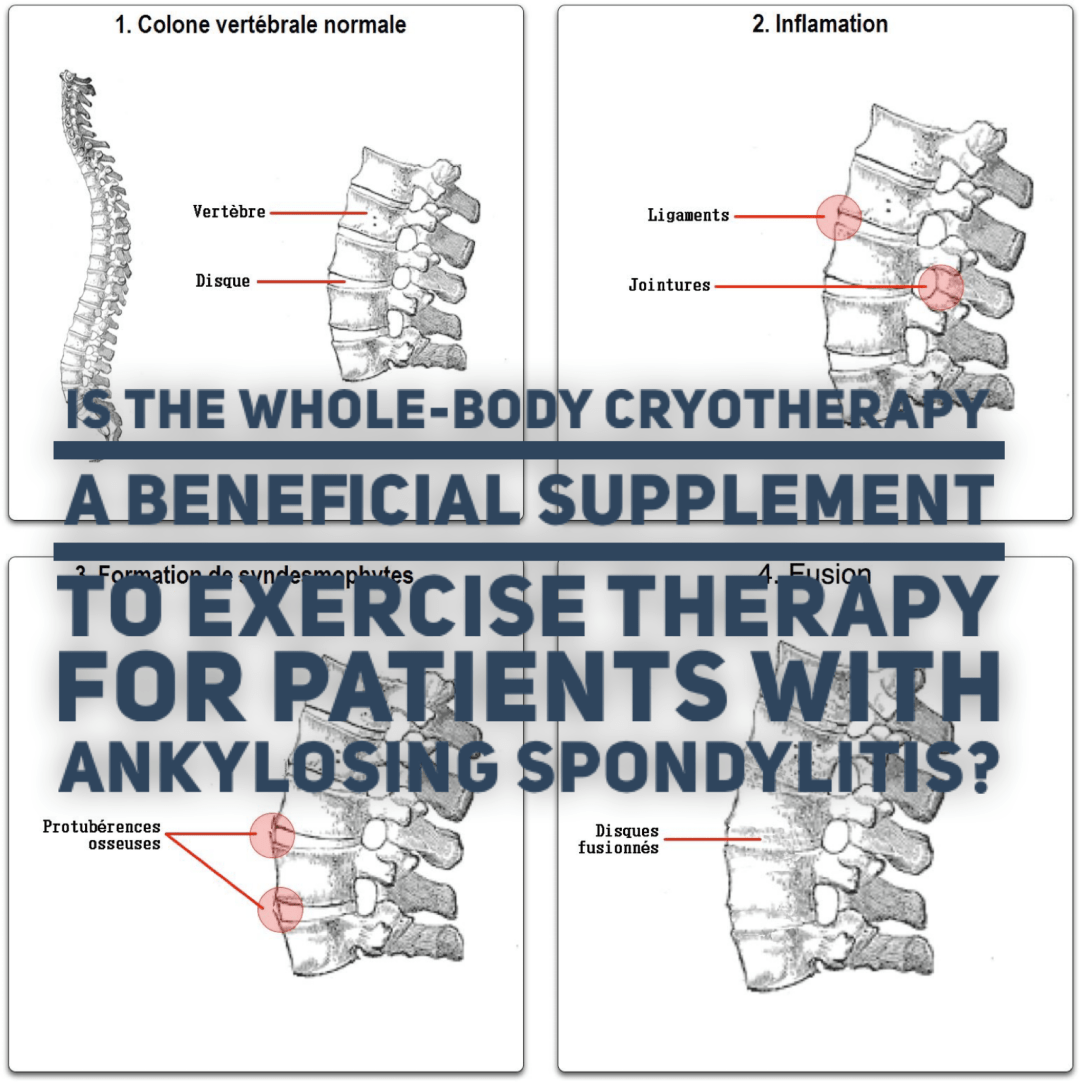
Is the whole-body cryotherapy a beneficial supplement to exercise therapy for patients with ankylosing spondylitis?

par SFCCE | 2020 | Publication Santé

Background: The treatment of ankylosing spondylitis (AS) patients requires a combination of non-pharmacological (education, exercise and physical therapy), as well as pharmacological treatment modalities. The optimal management of AS still remains unresolved.

Objective: The aim was to measure and compare the effects of whole-body cryotherapy (WBC) at -110∘C and at -60∘C and exercise therapy alone on disease activity and the functional parameters of patients with AS.

Methods: Ninety-two patients were allocated to three groups: with WBC at -110∘C or at -60∘C (each concurrent with exercise therapy), or exercise therapy alone. Disease activity and the functional parameters of the patients were measured at study entry and at the end of the 8-day treatment.

Results: Supervised therapy, irrespective of the program, led to a significant reduction in disease activity (Bath Ankylosing Spondylitis Disease Activity Index: BASDAI, Ankylosing Spondylitis Disease Activity Score: ASDAS-CRP), disease-related back pain, fatigue, duration and intensity of morning stiffness and a significant improvement in the patient’s functional capacity (Bath Ankylosing Spondylitis Functional Index: BASFI), spine mobility (Bath Ankylosing Spondylitis Metrology Index: BASMI) and chest expandability, with no changes in the levels of CRP. It has been demonstrated that following therapy, the group that underwent cryotherapy at -110∘C manifested significantly reduced disease activity (BASDAI) compared with exercise therapy only (p= 0.024).

Conclusion: Adding cryotherapy at -110∘C to exercise therapy led to significantly reduced disease activity expressed in BASDAI, compared with exercise therapy alone.

Wojciech Romanowski, M, Straburzyńska-Lupa, A. (2020)

Full Article :  https://pubmed.ncbi.nlm.nih.gov/31594196/ 

Effects of Whole-Body Cryostimulation (-90°C) on Somnolence and Psychological Well-Being in an Older Patient with Restless Legs Syndrome

par SFCCE | 2020 | Publication Santé

Background: We aimed at evaluating the feasibility and effects of intense (i.e. -90°C) whole-body cryostimulation (WBC) on somnolence and psychological well-being in an older-adult patient diagnosed with restless legs syndrome (RLS).

Methods: An interrupted time series approach was used in which the efficacy of cryostimulation was evaluated by measuring self-reported fatigue, wake time sleepiness, and well-being several times prior to, during, and after exposure to treatment (i.e. daily 3-min sessions of intense WBC).

Results: No adverse event occurred. Reported levels of sleepiness decreased immediately following the beginning of the treatment phase. In the same time, self-reported well-being significantly increased. Effects sizes were of large magnitude.

Conclusion: In summary, the present study demonstrated that daily exposure to extremely cold air in an enclosed space for 2 weeks was feasible and effective in promoting physical and psychological states in an older patient with sleep disturbances.

Kasmi, S, Filliard, JR, Polidori, G, Bouchet, B, Blancheteau, Y, Legrand, FD. (2020)

Full Article :  https://pubmed.ncbi.nlm.nih.gov/31515948/ 

Impact of acute partial‑body cryostimulation on cognitive performance, cerebral oxygenation, and cardiac autonomic activity

par SFCCE | 2021 | Publication Santé

We assessed the effects of a 3‑min partial‑body cryostimulation (PBC) exposure—where the whole body is exposed to extreme cold, except the head—on cognitive inhibition performance and the possible implications of parasympathetic cardiac control and cerebral oxygenation. In a randomized controlled counterbalanced cross‑over design, eighteen healthy young adults (nine males and nine females) completed a cognitive Stroop task before and after one single session of PBC (3‑min exposure at − 150 °C cold air) and a control condition (3 min at room temperature, 20 °C). During the cognitive task, heart rate variability (HRV) and cerebral oxygenation of the prefrontal cortex were measured using heart rate monitoring and near‑infrared spectroscopy methods. We also recorded the cerebral oxygenation during the PBC session. Stroop performance after PBC exposure was enhanced (562.0 ± 40.2 ms) compared to pre‑PBC (602.0 ± 56.4 ms; P < 0.042) in males only, accompanied by an increase (P < 0.05) in HRV indices of parasympathetic tone, in greater proportion in males compared to females. During PBC, cerebral oxygenation decreased in a similar proportion in males and females but the cerebral extraction (deoxyhemoglobin: ΔHHb) remained higher after exposure in males, only. These data demonstrate that a single PBC session enhances the cognitive inhibition performance on a Stroop task in males, partly mediated by a greater parasympathetic cardiac control and greater cerebral oxygenation. The effects of PBC on cognitive function seem different in females, possibly explained by a different sensitivity to cold stimulation.

Dimitri Theurot1, Benoit Dugué1, Wafa Douzi1, Paul Guitet1, Julien Louis2 & Olivier Dupuy 1,3* 

Full article : | https://doi.org/10.1038/s41598-021-87089-y

Blood pro-oxidant/antioxidant balance in young men with class II obesity after 20 sessions of whole body cryostimulation: a preliminary study

par SFCCE | 2021 | Publication Santé

Objectives: In obesity, there is a shift in the pro-oxidative-antioxidant balance towards the oxidationreactions. However, it has been shown that in people with normal body composition, after a series of whole-body cryotherapy (WBC), the balance shifts in the opposite direction. Design: The aim of the study was to assess the impact of 20 WBC treatments on blood pro-oxidative-antioxidant balance. Interventions: Study included 14 obese (BMI > 35) and 10 non-obese volunteers. Methods: The total antioxidative (TAS/TAC) and pro-oxidative status (TOS/TOC) in serum and activity of antioxidant enzymes in erythrocytes were determined before the first and 2 hours after the last cryostimulation. Results: In the obese group, a significantly higher level of TOS/TOC, and its significant decrease after the WBC series, was observed. Cryotherapy had no influence on TAS/TAC level which was similar in both groups. Changes in activity of antioxidant enzymes were multidirectional. An increase in CAT activity in the obese group was observed. OSI, both before and after a series of treatments, was significantly higher in obese subjects. Conclusions: A beneficial effect on the level of TOS/TOC and CAT activity was indicated, but the proposed number of treatments for patients with class II obesity turned out to be insufficient. Trial registration: Australian New Zealand Clinical Trials Registry identifier: ACTRN12619000524190.

Pilch, W, Wyrostek, J, Piotrowska, A, Czerwińska-Ledwig, O, Zuziak, R, Sadowska-Krępa, E, Maciejczyk, M, Żychowska, M. (2021) 

Full Article : https://pubmed.ncbi.nlm.nih.gov/33560197/&nbsp;

The improvement of cognitive deficits after whole-body cryotherapy

par SFCCE | 2021 | Publication Santé

Background: Whole-body cryotherapy (WBC) – a repetitive, short-term exposure to extremely low temperatures – may become an effective early intervention for mild cognitive impairment (MCI). It is a heterogeneous group of symptoms associated with cognitive dysfunction which is estimated to transform into dementia in 50% cases.

Study design: The prospective randomised double-blind sham-controlled study aimed to determine the efficacy of WBC on cognitive functioning and biological mechanisms. The study was registered with Australian New Zealand Clinical Trials Registry (ACTRN12619001627145).

Methods: Participants with MCI (n = 62; (20<MoCA>26) were randomly allocated to cryogenic temperatures (-110 °C till -160 °C) (EG, n = 33) or placebo-controlled group (CG, n = 29). Cognitive functions were measured at baseline (T1), after the 10th WBC session (T2) and after 2 week-break (T3) with DemTect, SLUMS and Test Your Memory (TYM). Secondary outcome measures included quality of life (WHOQoL-BREF), self-reported well-being (VAS) and depressive symptoms (GDS). Whole blood samples (10 ml) were collected at T1 and T2 to evaluate levels of cytokines, neurotrophins, NO and biochemical parameters CRP total cholesterol, prolactin).

Results: There were significant differences between groups measured at T2 in immediate recall (DemTect) and in orientation (TYM) in favour of WBC group. Improvement in mood was detected in self-reported depressive symptoms level (WHOQoL-26; T2 p = 0.04; VAS mood T2 p = 0.02; T3 p = 0.07). The significant reduction of BDNF level was observed (p < 0.05).

Conclusions: WBC may increase the performance of cognitive functions. It seems promising to combine WBC with existing behavioural and cognitive trainings in the future studies investigating early interventions methods in MCI.

Rymaszewska, J, Lion, KM, Stańczykiewicz, B, Rymaszewska, JE, Trypka, E, Pawlik-Sobecka, L, Kokot, I, Płaczkowska, S, Zabłocka, A, Szcześniak, D. (2021)

Full Article : https://pubmed.ncbi.nlm.nih.gov/33454354/