Multiple Cryotherapy Attenuates Oxi-Inflammatory Response Following Skeletal Muscle Injury

par SFCCE | 2020 | Publication Sport
The oxi-inflammatory response is part of the natural process mobilizing leukocytes and satellite cells that contribute to clearance and regeneration of damaged muscle tissue. In sports medicine, a number of post-injury recovery strategies, such as whole-body cryotherapy (WBC), are used to improve skeletal muscle regeneration often without scientific evidence of their benefits. The study was designed to assess the impact of WBC on circulating mediators of skeletal muscle regeneration. Twenty elite athletes were randomized to WBC group (3-min exposure to -120 °C, twice a day for 7 days) and control group. Blood samples were collected before the first WBC session and 1 day after the last cryotherapy exposure. WBC did not affect the indirect markers of muscle damage but significantly reduced the generation of reactive oxygen and nitrogen species (H2O2 and NO) as well as the concentrations of serum interleukin 1β (IL-1β) and C-reactive protein (CRP). The changes in circulating growth factors, hepatocyte growth factor (HGF), insulin-like growth factor (IGF-1), platelet-derived growth factor (PDGFBB), vascular endothelial growth factor (VEGF), and brain-derived neurotrophic factor (BDNF), were also reduced by WBC exposure. The study demonstrated that WBC attenuates the cascade of injury-repair-regeneration of skeletal muscles whereby it may delay skeletal muscle regeneration.

Zembron-Lacny, A, Morawin, B, Wawrzyniak-Gramacka, E, Gramacki, J, Jarmuzek, P, Kotlega, D, Ziemann, E. (2020)

Full Article :  https://pubmed.ncbi.nlm.nih.gov/33120891/ 

Short-Term Resistance Training Supported by Whole-Body Cryostimulation Induced a Decrease in Myostatin Concentration and an Increase in Isokinetic Muscle Strength

par SFCCE | 2020 | Publication Sport

The study aimed to determine whether combining cryostimulation with resistance training would effectively increase muscle strength, and if so, whether this adaptation would be related to changes in circulating levels of exerkines (i.e., mediators of systemic adaptation to exercise).Twenty-five students completed 12 sessions of resistance training, each followed by either cryostimulation (n = 15, 3 min exposure at -110 °C) or passive recovery (n = 10). Prior to and post this intervention, participants performed two eccentric cycling bouts (before and after training). At these points, serum concentrations of muscle damage marker (myoglobin), exerkines (interleukin 6 (IL-6), interleukin 15 (IL-15), irisin, brain-derived neurotrophic factor), hypertrophy-related factors (myostatin, insulin-like growth factor 1), and muscle strength were measured. The applied procedure reduced the physiological burden of the second eccentric cycling bout and myoglobin concentrations only in the group subject to cryostimulation. The same group also exhibited decreased levels of myostatin (from 4.7 ± 1.7 to 3.8 ± 1.8 ng·mL-1, p < 0.05). A significant and large interaction between the group × time was noted in IL-15 concentration (p = 0.01, ηp2=0.27). Training and cryostimulation induced a positive and likely significant improvement of isokinetic muscle strength. Altogether, obtained results support the claim that resistance training combined with cold exposure modified muscle strength through modulation of myostatin and IL-15 concentrations.

Jaworska, J, Rodziewicz-Flis, E, Kortas, J, Kozłowska, M, Micielska, K, Babińska, A, Laskowski, R, Lombardi, G, Ziemann, E. (2020) 

Full Article :  https://pubmed.ncbi.nlm.nih.gov/32751455/ 

Differences in cryostimulation and sauna effects on post-exercise changes in blood serum of athletes

par SFCCE | 2020 | Publication Sport

Objectives: There is a growing body of evidence supporting the role of whole-body cryostimulation (WBC) and sauna – bathing as treatments for relaxation, mental well-being and several health problems. Despite their polar opposite temperatures, both of these treatments come with a dose of similar health benefits. This study is designed to compare effects of WBC and sauna application on the athletes’ response to exercise.

Design: The blood samples were collected from 10 professional cross-country skiers at four stages: before exercise, after exercise, at 1-h recovery and after 24 h of rest in sessions before and after 10 thermal treatments. Differential scanning calorimetry (DSC) was used to examine the process of serum denaturation. The parameters of endothermic transition were compared at various stages of each exercise session.

Results: Post-exercise changes in DSC profiles of athlete’s blood serum are similar in character but clearly stronger in the session held after sauna treatments and slightly weaker after WBC than those in the session not preceded by treatments. These changes can be, at least in part, explained by the exercise induced increase in the concentration of oxidized albumin. A return of serum denaturation transition to pre-exercise shape has been observed within a few hours of rest. It suggests relatively quick restoration of a fraction of non-oxidized albumin molecules during the recovery period.

Conclusions: An exercise performed by athletes after a series of sauna treatments leads to temporary greater modification of the blood serum proteome than the similar exercise during the session preceded by WBC treatments.

Michnik, A, Duch, K, Pokora, I, Krępa, ES. (2020)

Full Article :  https://pubmed.ncbi.nlm.nih.gov/32507419/ 

Effect of an Innovative Mattress and Cryotherapy on Sleep after an Elite Rugby Match

par SFCCE | 2020 | Publication Sport

Introduction: This study aimed to explore the relationship between elite rugby union match and postmatch sleep architecture and to investigate the effects of a high-heat capacity mattress (MAT) and a whole-body cryotherapy (WBC) session on postmatch sleep architecture.

Methods: Nineteen elite male U23 rugby union players performed in three official matches, followed by three experimental conditions, in a randomized order: MAT, WBC, and no intervention (CONT). Match load was evaluated using GPS trackers and video analyses. Sleep architecture was assessed by polysomnography (PSG). Core body temperature (CBT) and mattress surface temperature were monitored during sleep. Linear mixed-effects models were conducted to assess the effects of each experimental condition on sleep, with match load variables as covariates.

Results: A lower wake after sleep onset (β = -10.5 min, P < 0.01) and higher rapid eye movement sleep proportion (β = +2.8%, P < 0.05) were reported for MAT compared with CONT. Moreover, lower mean CBT (β = -0.135°C, P < 0.001) and mean mattress surface temperature (β = -2.736°C, P < 0.001) during sleep were observed for MAT compared CONT. WBC did not affect nocturnal CBT nor interfere with sleep architecture. For every 100-m increase in high-speed running distance, a higher slow wave sleep (β = +1.1%, P = 0.05) and lower light sleep proportion (β = -1.2%, P < 0.05) proportion were observed. Conversely, for every 10 supplementary collisions, lower slow wave sleep (β = -1.9, P = 0.09) and higher light sleep (β = +2.9%, P < 0.001) proportion were observed.

Conclusion: MAT use had a positive effect on sleep architecture after an elite rugby union match, potentially through a more efficient nocturnal heat transfer.

Aloulou, A, Leduc, C, Duforez, F, Piscione, J, Cheradame, J, Bieuzen, F, Thomas, C, Chennaoui, M, VAN Beers, P, Nedelec, M..  (2020)

Full Article :  https://pubmed.ncbi.nlm.nih.gov/32472928/ 

Cryotherapy Models and Timing-Sequence Recovery of Exercise-Induced Muscle Damage in Middle- and Long-Distance Runners

par SFCCE | 2020 | Publication Sport

Context: Among sports-recovery methods, cold-water immersion (CWI), contrast-water therapy (CWT), and whole-body cryotherapy (WBC) have been applied widely to enhance recovery after strenuous exercise. However, the different timing effects in exercise-induced muscle damage (EIMD) after these recovery protocols remain unknown.

Objective: To compare the effects of CWI, CWT, and WBC on the timing-sequence recovery of EIMD through different indicator responses.

Design: Crossover study.

Setting: Laboratory.

Patients or other participants: Twelve male middle- and long-distance runners from the Beijing Sport University (age = 21.00 ± 0.95 years).

Intervention(s): Participants were treated with different recovery methods (control [CON], CWI, CWT, WBC) immediately postexercise and at 24, 48, and 72 hours postexercise.

Main outcome measure(s): We measured perceived sensation using a visual analog scale (VAS), plasma creatine kinase (CK) activity, plasma C-reactive protein (CRP) activity, and vertical-jump height (VJH) pre-exercise, immediately postexercise, and at 1, 24, 48, 72, and 96 hours postexercise.

Results: For the VAS score and CK activity, WBC exhibited better timing-sequence recovery effects than CON and CWI (P < .05), but the CWT demonstrated better effects than CON (P < .05). The CRP activity was lower after WBC than after the other interventions (P < .05). The VJH was lower after WBC than after CON and CWI (P < .05).

Conclusions: The WBC positively affected VAS, CK, CRP, and VJH associated with EIMD. The CWT and CWI also showed positive effects. However, for the activity and timing-sequence effect, CWT had weaker effects than WBC.

Qu, C, Wu, Z, Xu, M, Qin, F, Dong, Y, Wang, Z, Zhao, J. (2020) 

Full Article :  https://pubmed.ncbi.nlm.nih.gov/32160058/ 

Effects of whole-body cryotherapy on 25-hydroxyvitamin D, irisin, myostatin, and interleukin-6 levels in healthy young men of different fitness levels

par SFCCE | 2020 | Publication Santé

Skeletal muscle and adipose tissue play an important role in maintaining metabolic homeostasis and thermogenesis. We aimed to investigate the effects of single and repeated exposure to whole-body cryotherapy in volunteers with different physical fitness levels on 25-hydroxyvitamin D (25(OH)D) and myokines. The study included 22 healthy male volunteers (mean age: 21 ± 1.17 years), who underwent 10 consecutive sessions in a cryogenic chamber once daily (3 minutes, -110 °C). Blood samples were collected before and 30 minutes and 24 hours after the first and last cryotherapy sessions. Prior to treatment, body composition and physical fitness levels were measured. After 10 cryotherapy treatments, significant changes were found in myostatin concentrations in the low physical fitness level (LPhL) group. The 25(OH)D levels were increased in the high physical fitness level (HPhL) group and decreased in the LPhL group. The HPhL group had significant changes in the level of high-sensitivity interleukin-6 after the first treatment. The LPhL group had significant changes in 25(OH)D, irisin, and myostatin levels after the tenth treatment. Our data demonstrated that in healthy young men, cryotherapy affects 25(OH)D levels, but they were small and transient. The body’s response to a series of 10 cryotherapy treatments is modified by physical fitness level.

Śliwicka, E, Cisoń, T, Straburzyńska-Lupa, A, Pilaczyńska-Szcześniak, L. (2020)

Full Article :  https://pubmed.ncbi.nlm.nih.gov/32277130/

Whole-body cryotherapy – promising add-on treatment of depressive disorders

par SFCCE | 2020 | Publication Santé

Objectives: New, effective biological interventions for treatment of depressive episodes and recurrent depression are still needed. Whole-body cryotherapy (WBC), which is a treatment using cryogenic temperature, is a novel therapeutic modality in neurology and rheumatology. The objective of this study was to determine the efficacy and safety of WBC as an add-on treatment for depressive episode.

Methods: 30 adults diagnosed with depressive episode were recruited to an observational, prospective study. 21 participants (17 women, 81%), mean age 46.1 (±16.7), completed the whole study procedure. The Hamilton Depression Rating Scale and the Beck Depression Inventory were used to assess the severity of depressive symptoms. Additionally, quality of life and anhedonia were assessed with the WHOQoL-BREF and the SHAPS. Participants undertook 10, 2-minute (from – 110 C to – 135 degrees C) WBC sessions within two weeks.

Results: Patients after WBC sessions showed significant improvement in the form of a reduction in total scores in scales assessing depressive symptoms: the HDRS (p< 0.00001) between T1 (16.94±4.3) and T4 (4.50±4.2) and the BDI-II (T1: 13.48±4.6; T4: 6.14±6.7, p<0.03), lower anhedonialevelon SHAPS (p =0.011) and higher quality of lifein thefollowing domains: physical health (p =0.024), psychological health (p =0.016) and environmental domain (p =0.003). Pre/post comparison of self-report well-being measured by the VAS scale showed a significant increase (p< 0.00001). It was shown that WBC have no effect on the level of cytokines, NO, hsCRP, ESR and TAS in blood (p> 0.05).

Conclusions: WBC proved to be an effective, safe, and tolerable add-on intervention in patients with depressive episode. Further randomized controlled trials should be conducted.

Keywords: depression; whole-body cryotherapy.

Rymaszewska, J, Urbanska, K, Szcześniak, D, Pawłowski, T, Pieniawska-Śmiech, K, Kokot, I, Pawlik-Sobecka, L, Płaczkowska, S, Zabłocka, A, Stańczykiewicz, B. (2020)

Full Article :  https://pubmed.ncbi.nlm.nih.gov/31955185/ 

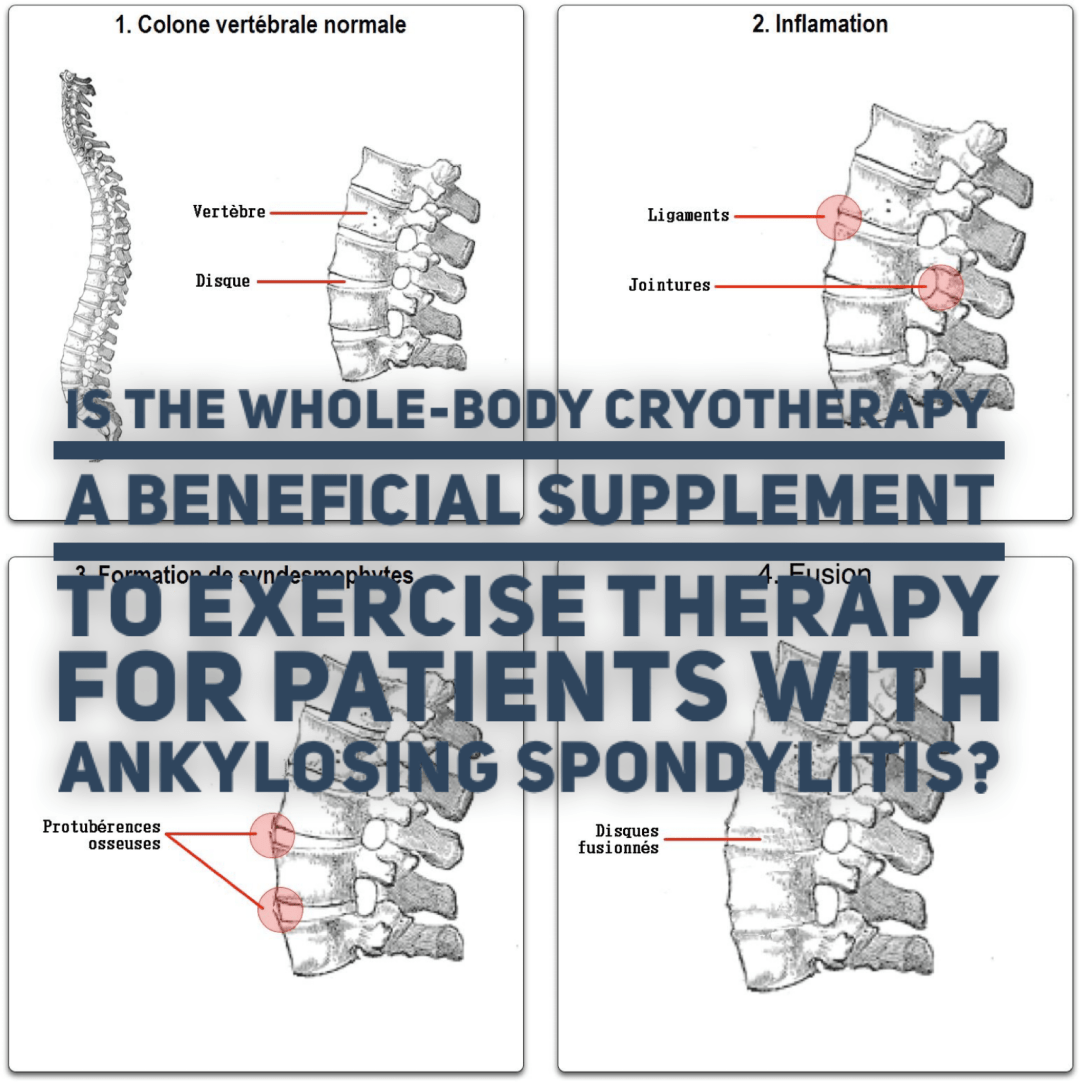
Is the whole-body cryotherapy a beneficial supplement to exercise therapy for patients with ankylosing spondylitis?

par SFCCE | 2020 | Publication Santé

Background: The treatment of ankylosing spondylitis (AS) patients requires a combination of non-pharmacological (education, exercise and physical therapy), as well as pharmacological treatment modalities. The optimal management of AS still remains unresolved.

Objective: The aim was to measure and compare the effects of whole-body cryotherapy (WBC) at -110∘C and at -60∘C and exercise therapy alone on disease activity and the functional parameters of patients with AS.

Methods: Ninety-two patients were allocated to three groups: with WBC at -110∘C or at -60∘C (each concurrent with exercise therapy), or exercise therapy alone. Disease activity and the functional parameters of the patients were measured at study entry and at the end of the 8-day treatment.

Results: Supervised therapy, irrespective of the program, led to a significant reduction in disease activity (Bath Ankylosing Spondylitis Disease Activity Index: BASDAI, Ankylosing Spondylitis Disease Activity Score: ASDAS-CRP), disease-related back pain, fatigue, duration and intensity of morning stiffness and a significant improvement in the patient’s functional capacity (Bath Ankylosing Spondylitis Functional Index: BASFI), spine mobility (Bath Ankylosing Spondylitis Metrology Index: BASMI) and chest expandability, with no changes in the levels of CRP. It has been demonstrated that following therapy, the group that underwent cryotherapy at -110∘C manifested significantly reduced disease activity (BASDAI) compared with exercise therapy only (p= 0.024).

Conclusion: Adding cryotherapy at -110∘C to exercise therapy led to significantly reduced disease activity expressed in BASDAI, compared with exercise therapy alone.

Wojciech Romanowski, M, Straburzyńska-Lupa, A. (2020)

Full Article :  https://pubmed.ncbi.nlm.nih.gov/31594196/ 

Effects of Whole-Body Cryostimulation (-90°C) on Somnolence and Psychological Well-Being in an Older Patient with Restless Legs Syndrome

par SFCCE | 2020 | Publication Santé

Background: We aimed at evaluating the feasibility and effects of intense (i.e. -90°C) whole-body cryostimulation (WBC) on somnolence and psychological well-being in an older-adult patient diagnosed with restless legs syndrome (RLS).

Methods: An interrupted time series approach was used in which the efficacy of cryostimulation was evaluated by measuring self-reported fatigue, wake time sleepiness, and well-being several times prior to, during, and after exposure to treatment (i.e. daily 3-min sessions of intense WBC).

Results: No adverse event occurred. Reported levels of sleepiness decreased immediately following the beginning of the treatment phase. In the same time, self-reported well-being significantly increased. Effects sizes were of large magnitude.

Conclusion: In summary, the present study demonstrated that daily exposure to extremely cold air in an enclosed space for 2 weeks was feasible and effective in promoting physical and psychological states in an older patient with sleep disturbances.

Kasmi, S, Filliard, JR, Polidori, G, Bouchet, B, Blancheteau, Y, Legrand, FD. (2020)

Full Article :  https://pubmed.ncbi.nlm.nih.gov/31515948/ 

Impact of acute partial‑body cryostimulation on cognitive performance, cerebral oxygenation, and cardiac autonomic activity

par SFCCE | 2021 | Publication Santé

We assessed the effects of a 3‑min partial‑body cryostimulation (PBC) exposure—where the whole body is exposed to extreme cold, except the head—on cognitive inhibition performance and the possible implications of parasympathetic cardiac control and cerebral oxygenation. In a randomized controlled counterbalanced cross‑over design, eighteen healthy young adults (nine males and nine females) completed a cognitive Stroop task before and after one single session of PBC (3‑min exposure at − 150 °C cold air) and a control condition (3 min at room temperature, 20 °C). During the cognitive task, heart rate variability (HRV) and cerebral oxygenation of the prefrontal cortex were measured using heart rate monitoring and near‑infrared spectroscopy methods. We also recorded the cerebral oxygenation during the PBC session. Stroop performance after PBC exposure was enhanced (562.0 ± 40.2 ms) compared to pre‑PBC (602.0 ± 56.4 ms; P < 0.042) in males only, accompanied by an increase (P < 0.05) in HRV indices of parasympathetic tone, in greater proportion in males compared to females. During PBC, cerebral oxygenation decreased in a similar proportion in males and females but the cerebral extraction (deoxyhemoglobin: ΔHHb) remained higher after exposure in males, only. These data demonstrate that a single PBC session enhances the cognitive inhibition performance on a Stroop task in males, partly mediated by a greater parasympathetic cardiac control and greater cerebral oxygenation. The effects of PBC on cognitive function seem different in females, possibly explained by a different sensitivity to cold stimulation.

Dimitri Theurot1, Benoit Dugué1, Wafa Douzi1, Paul Guitet1, Julien Louis2 & Olivier Dupuy 1,3* 

Full article : | https://doi.org/10.1038/s41598-021-87089-y